
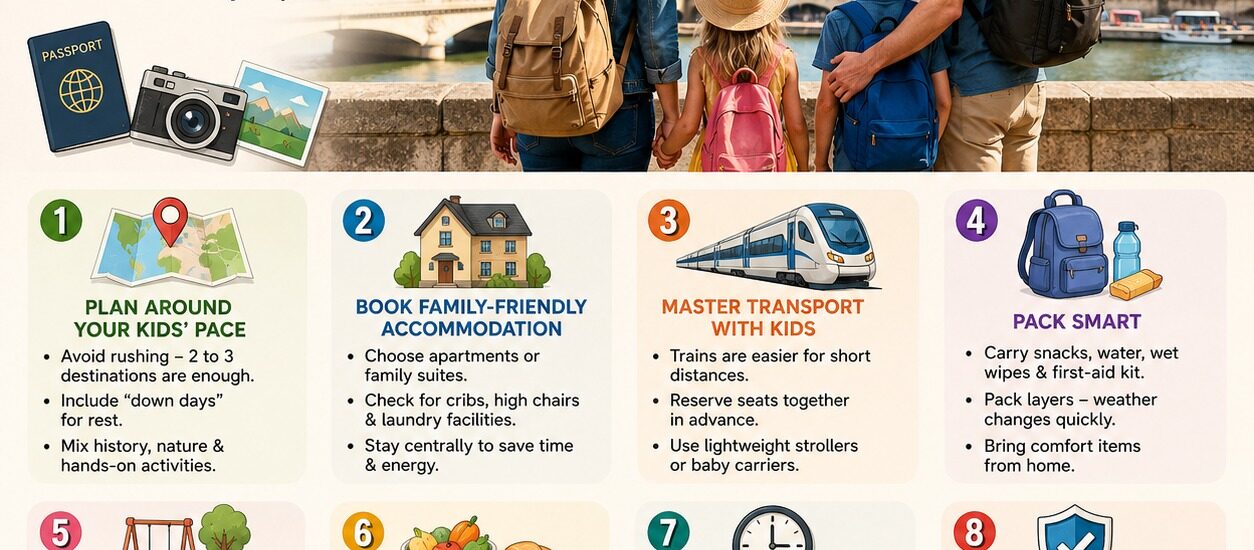
Traveling across Europe with children can be one of the most rewarding experiences for a family — but it also comes with its own set of challenges. Here’s a practical guide to help you plan a smoother, more enjoyable trip
1. Plan Your Itinerary Around Your Kids’ Pace
- Avoid packing too many cities into one trip. Two or three destinations are usually enough for a 1–2 week trip.
- Build in “down days” with no major activities — kids (and parents) need rest.
- Choose destinations with a mix of history, nature, and hands-on activities so children stay engaged.
2. Book Family-Friendly Accommodation
- Look for apartments or family suites instead of standard hotel rooms — extra space and a kitchenette make a big difference.
- Check if the property offers cribs, high chairs, or laundry facilities.
- Staying centrally (even if slightly pricier) cuts down on long commutes with tired kids.
3. Master European Transport with Kids
- Trains are often easier than flights for short-to-medium distances — less security hassle and more room to move.
- Reserve seats together in advance, especially in peak season.
- Strollers work well in most cities, but cobblestones and old metro stations without elevators can be tricky — a lightweight, foldable stroller or a baby carrier is a good backup.
4. Pack Smart
- Bring a small “travel kit” with snacks, a refillable water bottle, wet wipes, and a basic first-aid kit.
- Pack layers — European weather can shift quickly, even in summer.
- Bring familiar comfort items (a stuffed toy, blanket) to help kids settle in unfamiliar places.
5. Balance Sightseeing with Kid-Friendly Breaks
- Alternate museum visits with parks, playgrounds, or gelato stops.
- Many European cities have excellent children’s museums, aquariums, and interactive science centers — a great way to combine fun and learning.
- Let kids pick one activity each day — it gives them ownership of the trip and reduces meltdowns.
6. Handle Food and Mealtimes Easily
- Look for restaurants with outdoor seating — more relaxed for kids who can’t sit still.
- Local markets are great for picking up bread, fruit, and snacks for picnics.
- Don’t be afraid to try local food in small portions — many kids surprise you with what they’ll eat while traveling.
7. Stay Flexible and Manage Expectations
- Build buffer time into your schedule for naps, meltdowns, or unexpected delays.
- Accept that you won’t see everything — prioritize a few key experiences over cramming in every landmark.
- Travel insurance that covers medical needs for children is worth the investment.
8. Safety Essentials
- Keep a photo of each child on your phone (updated for the trip) in case you get separated.
- Consider ID bracelets with a parent’s phone number for younger kids in crowded areas.
- Know the local emergency number (112 works across the EU).
Bottom line: Traveling with kids in Europe is very doable with the right pacing, accommodation, and a flexible mindset. The goal isn’t a perfect trip — it’s a memorable one for the whole family.