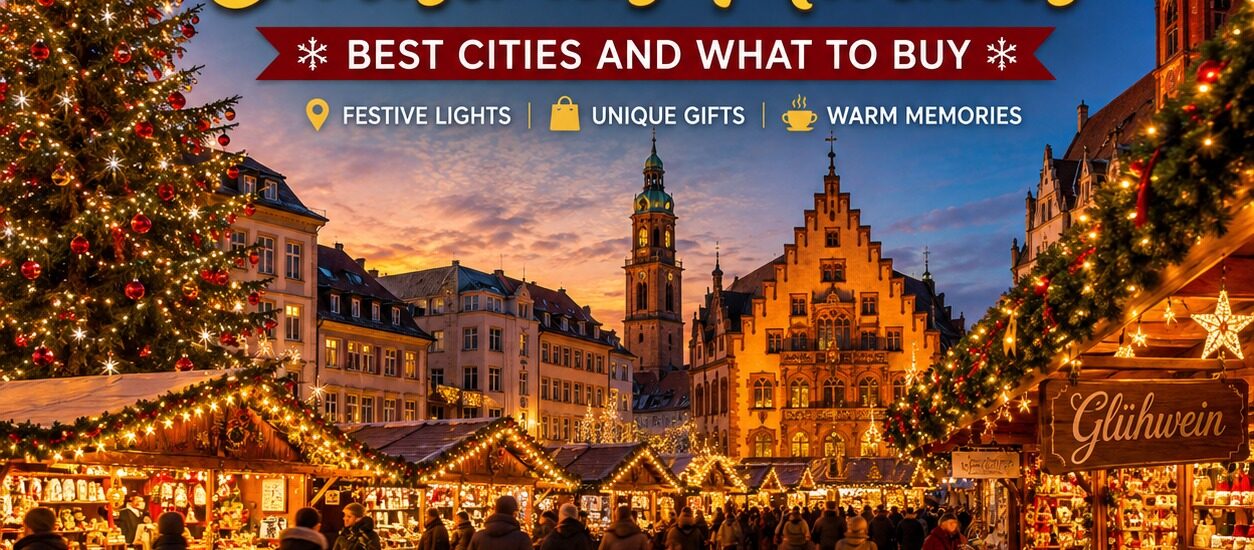
Germany is one of the best destinations in Europe for experiencing the magic of Christmas. From historic town squares illuminated by thousands of lights to wooden market stalls filled with handmade crafts, festive food, mulled wine and traditional decorations, Germany’s Christmas markets offer a memorable winter experience.
If you are planning a Germany Christmas market trip, cities such as Nuremberg, Dresden, Cologne, Munich and Frankfurt should be high on your list. Each destination has its own atmosphere, traditions and shopping specialties.
Why Visit Germany Christmas Markets?
German Christmas markets, traditionally known as Weihnachtsmärkte, combine local culture, food, shopping and festive entertainment. Many markets are located in historic city centres, making them ideal for combining Christmas shopping with sightseeing.
Visitors can enjoy:
- Traditional German Christmas decorations
- Handmade wooden crafts
- Christmas ornaments
- Gingerbread and festive sweets
- Bratwurst and other German street food
- Hot mulled wine known as Glühwein
- Winter performances and live music
- Local handicrafts and gift items
The markets generally take place during the weeks leading up to Christmas, although opening and closing dates vary by city and year.
Best Christmas Markets in Germany
1. Nuremberg Christmas Market
Nuremberg’s Christkindlesmarkt is one of Germany’s most famous Christmas markets. The market takes place around the historic Hauptmarkt and attracts visitors looking for traditional Bavarian Christmas experiences.
The market is particularly known for its traditional wooden stalls, festive decorations and Nürnberger Lebkuchen, a famous type of German gingerbread.
What to buy:
- Traditional Christmas ornaments
- Lebkuchen
- Handmade decorations
- Wooden toys
- Candles
- Local handicrafts
Best for: Traditional Christmas atmosphere and authentic German souvenirs.
2. Dresden Striezelmarkt
Dresden is home to the Striezelmarkt, one of Germany’s oldest Christmas markets. Its long history and traditional Saxon character make it an excellent destination for travellers interested in German Christmas culture.
One of the market’s most famous specialties is Dresdner Christstollen, a traditional Christmas fruit bread.
What to buy:
- Dresden Christstollen
- Wooden Christmas decorations
- Nutcrackers
- Traditional handicrafts
- Christmas pyramids
- Handmade ornaments
Best for: Traditional Saxon crafts and Christmas food.
3. Cologne Christmas Markets
Cologne offers several Christmas markets rather than just one. The most famous is the market around Cologne Cathedral, where visitors can shop beneath the impressive backdrop of the city’s iconic cathedral.
Cologne is an excellent choice if you want to combine Christmas markets with sightseeing, shopping and nightlife.
What to buy:
- Christmas ornaments
- Handmade gifts
- Candles
- Local sweets
- Wooden crafts
- Christmas-themed souvenirs
Best for: First-time visitors and travellers who want multiple markets in one city.
4. Munich Christmas Market
Munich brings a distinctly Bavarian atmosphere to the Christmas season. The central Christmas market at Marienplatz is surrounded by historic architecture and is one of the city’s most popular winter attractions.
Visitors can explore stalls selling traditional Bavarian crafts, decorations and festive foods.
What to buy:
- Bavarian handicrafts
- Wooden decorations
- Christmas ornaments
- Traditional clothing accessories
- Handmade candles
- Festive food products
Best for: Combining Christmas markets with Bavarian culture and city sightseeing.
5. Frankfurt Christmas Market
The Frankfurt Christmas Market is one of the major festive attractions in the city centre. The market spreads through central Frankfurt and provides plenty of opportunities for shopping and trying traditional German Christmas food.
Frankfurt is also convenient for international travellers because of its major airport and excellent transport connections.
What to buy:
- Christmas decorations
- Handmade crafts
- Candles
- Wooden gifts
- Traditional sweets
- Local souvenirs
Best for: Easy access and combining Christmas shopping with a city break.
6. Stuttgart Christmas Market
Stuttgart is another excellent destination for Christmas market lovers. Its market is famous for elaborately decorated stalls, creating a particularly festive atmosphere throughout the city centre.
The surrounding region also offers plenty of opportunities to explore German food and culture.
What to buy:
- Handmade Christmas decorations
- Wooden crafts
- Candles
- Traditional toys
- Local food products
- Festive souvenirs
Best for: Beautiful market stalls and a traditional German Christmas experience.
7. Leipzig Christmas Market
Leipzig’s Christmas market takes place in the historic city centre and offers a mixture of traditional German Christmas traditions, food and entertainment.
The market is a good choice for travellers who want a festive experience with a slightly less tourist-focused atmosphere than some of Germany’s most famous markets.
What to buy:
- Handmade crafts
- Christmas ornaments
- Wooden toys
- Local sweets
- Traditional decorations
Best for: Culture, history and Christmas shopping.
What to Buy at German Christmas Markets
One of the biggest attractions of German Christmas markets is the variety of unique products available. Instead of buying generic souvenirs, look for traditional handmade items that reflect the region you are visiting.
1. Wooden Christmas Decorations
Wooden decorations are among the most popular German Christmas souvenirs. You can find miniature houses, angels, stars, Christmas figures and other handcrafted items.
2. Nutcrackers
Traditional German Nutcracker figures make excellent souvenirs and Christmas decorations. They are particularly associated with the Christmas traditions of Germany’s eastern regions.
3. Christmas Pyramids
Wooden Christmas pyramids are another classic German Christmas decoration. Many are beautifully handcrafted and feature rotating figures when placed near a heat source.
4. German Christmas Ornaments
Look for handmade glass, wooden and ceramic ornaments. These are lightweight enough to take home and can become a memorable part of your Christmas decorations.
5. Lebkuchen
German gingerbread, particularly Lebkuchen, is one of the most popular edible souvenirs from Christmas markets.
If you are visiting Nuremberg, trying its famous gingerbread should be on your itinerary.
6. Dresdner Christstollen
If you visit Dresden, consider buying Christstollen, a traditional fruit bread associated with Christmas in the region.
It can make a great food gift for friends and family, although you should check packaging and airline rules before travelling with food internationally.
7. Handmade Candles
Christmas markets often feature beautifully decorated candles in different shapes, colours and designs. They are practical souvenirs and generally easier to pack than larger decorations.
8. Local Handicrafts
Instead of buying mass-produced souvenirs, look for products made by local artisans. Handmade ceramics, textiles, wooden crafts and decorative items can provide a more authentic memory of your trip.
Best German Christmas Market Foods to Try
Shopping is only half the experience. German Christmas markets are also famous for their seasonal food.
Make sure to try:
- Bratwurst – Traditional German sausage served hot
- Lebkuchen – German gingerbread
- Gebrannte Mandeln – Sugar-coated roasted almonds
- Reibekuchen – Crispy potato pancakes
- Dampfnudeln – Sweet steamed dumplings
- Stollen – Traditional Christmas fruit bread
- Glühwein – Hot spiced mulled wine
- Kinderpunsch – A non-alcoholic hot festive drink
Christmas Market Shopping Tips
Carry Cash
Although card payments are increasingly common, some smaller stalls may still prefer cash. Keeping some euros with you is useful.
Bring a Reusable Shopping Bag
You may end up buying several decorations, food products and gifts. A reusable bag makes shopping much easier.
Compare Prices
Prices can vary between stalls and cities. If you are buying multiple souvenirs, compare similar products before making a purchase.
Look for Handmade Products
Check whether an item is locally handmade or mass-produced. If authenticity matters to you, ask the seller about where and how the product was made.
Protect Fragile Souvenirs
Glass ornaments and wooden decorations should be packed carefully, especially if you are flying back home.
When Is the Best Time to Visit Germany Christmas Markets?
The Christmas market season usually begins in late November and continues through December, with many markets ending shortly before Christmas. Exact dates differ between cities and can change each year.
For a classic festive atmosphere, visiting in December is a great option. Weekdays are generally more comfortable if you want to avoid some of the largest weekend crowds.
How to Plan a Germany Christmas Market Trip
A multi-city Christmas market trip can be an excellent way to experience different German traditions.
A possible itinerary is:
Day 1–2: Nuremberg
Explore the historic centre and Christkindlesmarkt.
Day 3–4: Munich
Visit Marienplatz, explore the Christmas markets and experience Bavarian culture.
Day 5–6: Dresden
Discover the Striezelmarkt and try traditional Christstollen.
Day 7–8: Leipzig
Explore the historic centre and Christmas market.
Day 9–10: Cologne
Visit the cathedral and explore the city’s different Christmas markets.
This route can be adjusted depending on your arrival airport, budget and preferred travel style.
Germany Christmas Markets: Which City Should You Choose?
|
City |
Best For |
Must-Buy |
|
Nuremberg |
Traditional Christmas experience |
Lebkuchen |
|
Dresden |
Historic traditions |
Christstollen & wooden crafts |
|
Cologne |
Multiple markets |
Christmas ornaments |
|
Munich |
Bavarian culture |
Bavarian handicrafts |
|
Frankfurt |
Easy accessibility |
Handmade gifts |
|
Stuttgart |
Beautiful market stalls |
Wooden decorations |
|
Leipzig |
Culture & history |
Local handicrafts |
Final Thoughts
Germany’s Christmas markets are more than shopping destinations. They are a chance to experience German traditions, regional food, historic architecture and the atmosphere of the holiday season.
Whether you choose the famous Nuremberg Christkindlesmarkt, Dresden’s historic Striezelmarkt, the Christmas markets around Cologne Cathedral or the festive streets of Munich, you can expect plenty of opportunities to shop for unique souvenirs and enjoy traditional winter food.
For the best experience, plan your trip around the Christmas market season, research the individual market dates before travelling and leave some extra space in your luggage for handmade German Christmas treasures.