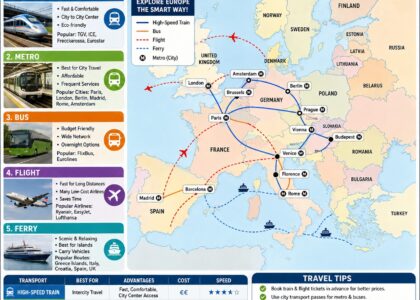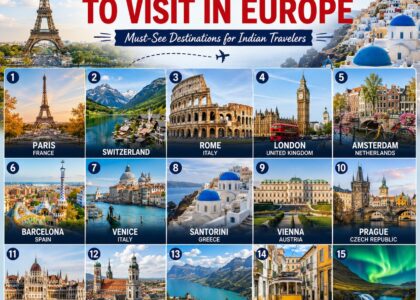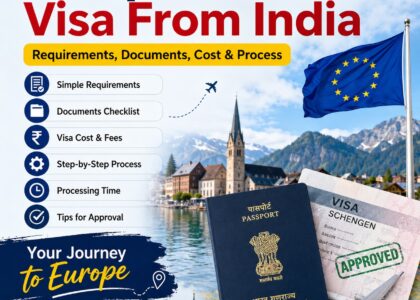
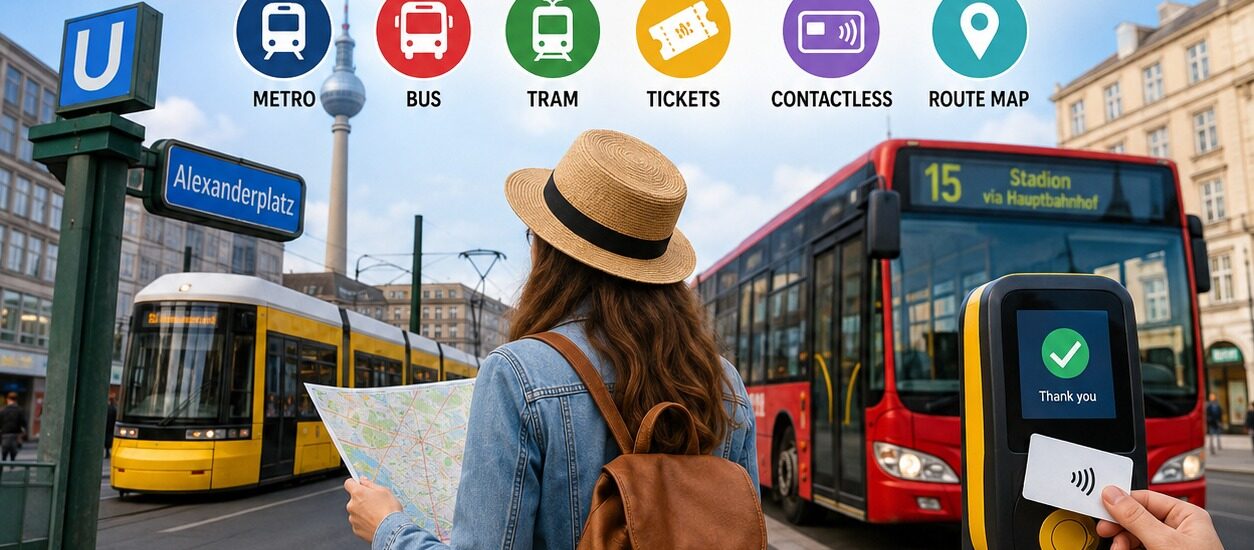
Traveling around Europe can be surprisingly easy when you understand how public transportation works. From high-speed metro systems and trams to buses, regional trains, and contactless payment, European cities offer some of the most efficient public transport networks in the world.
For first-time visitors, however, understanding tickets, zones, routes, transfers, and payment methods can sometimes feel confusing.
This guide explains how to use public transport in major European cities in 2026, including Paris, London, Rome, Amsterdam, Berlin, Barcelona, Vienna, Madrid, and more. You’ll learn how to buy tickets, choose the right pass, avoid common mistakes, and save money while exploring Europe.
Why Use Public Transport in Europe?
Public transportation is usually the easiest and most affordable way to explore major European cities.
Instead of dealing with expensive parking, traffic, and taxi fares, travelers can use metros, buses, trams, and trains to reach major attractions.
Main benefits include:
- Lower travel costs than taxis and private transfers
- Easy access to tourist attractions
- Frequent services in major cities
- No need to rent a car
- Convenient connections between airports and city centers
- Useful mobile apps for route planning
- Contactless payment available in many cities
For most city breaks, public transport is an essential part of the travel budget.
1. Public Transport in Paris
Paris has an extensive transportation network consisting of the Metro, RER trains, buses, and trams.
The Metro is usually the fastest way to move around central Paris, while RER trains are useful for destinations farther outside the city.
How to Use the Paris Metro
Look for the Metro entrance marked with signs such as Métro.
Before entering:
- Check your destination and Metro line.
- Confirm the direction of travel.
- Buy or activate the appropriate ticket.
- Follow signs to your platform.
- Keep your ticket or travel authorization until you leave the system.
The Metro is particularly useful for attractions such as the Eiffel Tower, Louvre Museum, Arc de Triomphe, and Montmartre.
Paris Public Transport Tip
If you’re staying for several days and making multiple journeys, compare individual tickets with available daily or multi-day travel options before purchasing.
2. Public Transport in London
London has one of Europe’s most recognizable public transport systems.
The network includes:
- Underground (Tube)
- Buses
- Overground trains
- Elizabeth line
- DLR
- Trams
- National Rail services
How to Pay
One of the easiest options for visitors is usually contactless payment using a compatible bank card or mobile wallet.
You generally tap in when entering and tap out when leaving rail and Underground services.
London’s fare system also uses daily and weekly fare caps, which can help prevent unlimited travel from becoming excessively expensive.
Important London Tip
Always use the same payment method when possible. For example, don’t randomly switch between a contactless bank card and a mobile wallet if you’re relying on fare capping.
Buses generally require tapping when boarding and don’t require a tap-out.
3. Public Transport in Rome
Rome’s public transportation network includes:
- Metro
- Buses
- Trams
- Regional trains
The Metro is useful for reaching major attractions, while buses and trams cover areas that aren’t directly served by the Metro.
Using Public Transport in Rome
Buy your ticket before boarding when required and validate it according to the instructions.
A typical tourist journey might combine walking with buses or Metro services.
For example:
Hotel → Metro → Colosseum → Walking → Bus → Vatican area
Rome is also a city where walking can be an excellent complement to public transport because many attractions are relatively close together.
Rome Tip
Don’t assume that every ticket is automatically valid simply because you purchased it. Check the ticket’s conditions, validity period, and whether validation is required.
4. Public Transport in Amsterdam
Amsterdam is famous for bicycles, but its public transportation system is also highly efficient.
The main options are:
- Trams
- Metro
- Buses
- Trains
Trams are particularly convenient for visitors staying in central Amsterdam.
Contactless Travel
Amsterdam’s public transport network supports convenient electronic payment options, making it possible for many travelers to pay without purchasing a traditional paper ticket.
When using a tap-in/tap-out system, remember to tap out when leaving.
Amsterdam Tip
Don’t confuse public transport with cycling routes. If you rent a bicycle, pay close attention to dedicated cycle lanes and traffic rules.
5. Public Transport in Berlin
Berlin has an integrated transportation system made up of:
- U-Bahn
- S-Bahn
- Buses
- Trams
- Regional trains
The city is divided into fare zones, commonly referred to as A, B, and C.
Most central tourist attractions are located within zones A and B.
U-Bahn vs S-Bahn
The easiest way to remember the difference is:
U-Bahn: Primarily underground urban Metro services.
S-Bahn: Suburban and regional rail services that also operate through central Berlin.
Both can be useful for tourists.
Berlin Tip
Always check which fare zone your journey covers before buying a ticket.
6. Public Transport in Barcelona
Barcelona offers a convenient combination of:
- Metro
- Buses
- Trams
- Regional trains
The Metro is one of the easiest ways to reach major areas of the city.
For attractions such as Sagrada Família, Park Güell, Gothic Quarter, and Barceloneta, combining Metro services with walking is often practical.
Barcelona Tip
If you’re making several journeys in a day, compare the cost of individual tickets with multi-journey or travel-pass options.
Airport transportation can have different ticket rules, so check whether your chosen pass includes airport services.
7. Public Transport in Madrid
Madrid has one of Spain’s largest Metro systems and an extensive bus network.
The city’s transportation options include:
- Metro
- City buses
- Regional trains
- Intercity rail connections
The Metro is usually the most convenient option for visitors exploring central Madrid.
Madrid Tip
Madrid’s transportation system uses zones and different ticket types, so choose a ticket based on your planned destinations rather than automatically buying the most expensive option.
8. Public Transport in Vienna
Vienna is one of Europe’s easiest cities for public transportation.
The network includes:
- U-Bahn
- Trams
- Buses
- Regional trains
Trams are particularly useful for sightseeing because several routes pass through central parts of the city.
Vienna Tip
If you’re staying several days, compare single tickets with multi-day travel products. The best option depends on how frequently you plan to use public transport.
9. Public Transport in Prague
Prague has an excellent combination of:
- Metro
- Trams
- Buses
Trams are especially useful for tourists because they connect many central neighborhoods and attractions.
How Prague Tickets Work
Prague uses time-based tickets. Depending on the ticket purchased, you can generally change between different types of public transport during the ticket’s validity period.
Always check the ticket’s duration before traveling.
Prague Tip
For sightseeing, trams can sometimes provide a more convenient route than the Metro because many attractions are close to tram stops.
10. Public Transport in Lisbon
Lisbon is famous for its historic yellow trams, but the city also has:
- Metro
- Buses
- Trams
- Elevators/funiculars
- Regional trains
The Metro is useful for longer journeys, while trams and buses can be more convenient in historic neighborhoods.
Lisbon Tip
Lisbon is very hilly. If you’re traveling with luggage, don’t automatically assume walking is the easiest option. Public transport can save considerable time and effort.
How to Buy Public Transport Tickets in Europe
Ticket systems vary between cities, but there are several common methods.
1. Ticket Machines
Most major stations have ticket machines.
Before purchasing, check:
- Destination
- Travel zones
- Ticket duration
- Number of journeys
- Whether the ticket needs validation
2. Mobile Apps
Many European cities have official transportation apps that allow you to:
- Plan routes
- Check schedules
- Buy tickets
- Find service disruptions
- View maps
Download the relevant official app before traveling whenever possible.
3. Contactless Bank Cards
Contactless payment is increasingly common across European transport networks.
Where supported, you may simply tap your bank card or smartphone at the reader.
However, acceptance varies between cities, so don’t assume contactless payment works everywhere.
4. Travel Passes
Travel passes can be useful if you plan to use public transport frequently.
Before buying one, calculate:
Number of planned journeys × individual ticket price
Then compare that total with the travel pass price.
How to Understand European Transport Zones
One of the biggest mistakes tourists make is buying the wrong ticket zone.
Cities may divide their networks into different fare areas.
For example:
- Central zone
- Inner zone
- Outer zone
- Airport zone
Your ticket must normally cover the areas through which you travel.
Example
If you’re staying in central Paris and visiting attractions within the city, you may need a different ticket than someone traveling from an outer suburb to the city center.
Always check the official fare map before purchasing.
How to Plan Your Journey
You don’t need to memorize the entire transportation network.
Use a route-planning app and enter:
Starting point → Destination → Desired arrival time
Then compare:
- Walking
- Metro
- Bus
- Tram
- Train
- Combined routes
Google Maps and official city transport apps can be particularly useful.
Pro Tip
Always check the route again shortly before leaving.
European public transport can experience:
- Delays
- Maintenance
- Strikes
- Temporary closures
- Platform changes
- Service disruptions
Airport to City Center: What Should You Use?
Airport transportation is often different from normal city travel.
Common options include:
- Airport Metro
- Airport Express Bus
- Regional train
- Local bus
- Taxi
- Private transfer
Before arriving, research:
Airport → City Center → Hotel
Check the journey time, ticket price, operating hours, and whether your regular city travel pass is valid.
For late-night arrivals, also check the last available service.
Public Transport Etiquette in Europe
Following basic etiquette makes your journey easier and more comfortable.
Remember to:
- Let passengers exit before entering.
- Stand to the side of train doors.
- Keep your luggage out of busy walkways.
- Offer priority seats when appropriate.
- Keep noise levels reasonable.
- Avoid blocking escalators.
- Follow local transport rules.
- Validate tickets when required.
If you’re carrying a large suitcase, avoid peak commuting hours whenever possible.
Common Public Transport Mistakes Tourists Make
Buying the Wrong Ticket
Don’t automatically buy the cheapest ticket. Make sure it covers your route and travel zones.
Forgetting to Validate
Some cities require tickets to be validated before travel.
Not Tapping Out
On tap-in/tap-out systems, forgetting to tap out can result in incorrect fares.
Ignoring Airport Rules
Airport services sometimes have separate fares or restrictions.
Traveling Without a Valid Ticket
Ticket inspections are common in European cities, and fines can be expensive.
Assuming All Transport Works the Same Way
Every city has its own ticketing system. What works in London may not work in Rome or Berlin.
How to Save Money on European Public Transport
You can reduce your transportation costs with a little planning.
1. Walk Short Distances
European city centers are often compact. Walking 15–25 minutes can sometimes be faster than waiting for a bus.
2. Compare Travel Passes
Calculate your expected daily journeys before buying a pass.
3. Stay Near Public Transport
A hotel near a Metro, tram, or train station can reduce both travel time and transportation costs.
4. Avoid Unnecessary Taxis
Use public transportation for airport and city journeys whenever practical.
5. Travel Outside Peak Hours
If your schedule is flexible, traveling outside commuter hours can make journeys more comfortable.
Public Transport Comparison: Major European Cities
|
City |
Main Transport |
Best For Tourists |
|
Paris |
Metro, RER, Bus, Tram |
Metro |
|
London |
Tube, Bus, Elizabeth line |
Tube + Bus |
|
Rome |
Metro, Bus, Tram |
Metro + Bus |
|
Amsterdam |
Tram, Metro, Bus, Train |
Tram |
|
Berlin |
U-Bahn, S-Bahn, Tram, Bus |
U-Bahn + S-Bahn |
|
Barcelona |
Metro, Bus, Tram |
Metro |
|
Madrid |
Metro, Bus, Train |
Metro |
|
Vienna |
U-Bahn, Tram, Bus |
U-Bahn + Tram |
|
Prague |
Metro, Tram, Bus |
Tram + Metro |
|
Lisbon |
Metro, Tram, Bus |
Metro + Tram |
Is Public Transport Safe in European Cities?
Public transport in major European cities is generally safe for tourists, but normal precautions are still important.
Keep your:
- Passport
- Phone
- Wallet
- Credit cards
- Travel documents
secure, especially in crowded stations and tourist areas.
Pickpocketing can occur in busy Metro stations, buses, and tourist hotspots.
Best Strategy for First-Time Europe Travelers
If you’re visiting Europe for the first time, don’t try to learn every transportation system before your trip.
Instead, follow this simple strategy:
Before Your Trip
- Download relevant transport apps.
- Research airport transportation.
- Check ticket zones.
- Learn available payment methods.
- Save your hotel address.
Every Morning
Check your planned routes.
Before Boarding
Confirm:
- Correct line
- Correct direction
- Correct ticket
- Correct platform
During the Journey
Watch station announcements and signs.
Before Leaving
Check whether you need to tap out or retain your ticket.
Final Thoughts
Using public transport is one of the best ways to explore Europe in 2026. Major cities such as Paris, London, Rome, Amsterdam, Berlin, Barcelona, Madrid, Vienna, Prague, and Lisbon have extensive transportation networks that make sightseeing easier and more affordable.
The most important rule is simple: never assume that every European city uses the same ticketing system.
Check the official transport website or app for the city you’re visiting, understand the fare zones, choose the right ticket, and keep your ticket or payment method accessible during your journey.
With a little preparation, you can move around European cities confidently without spending a fortune on taxis or private transfers.