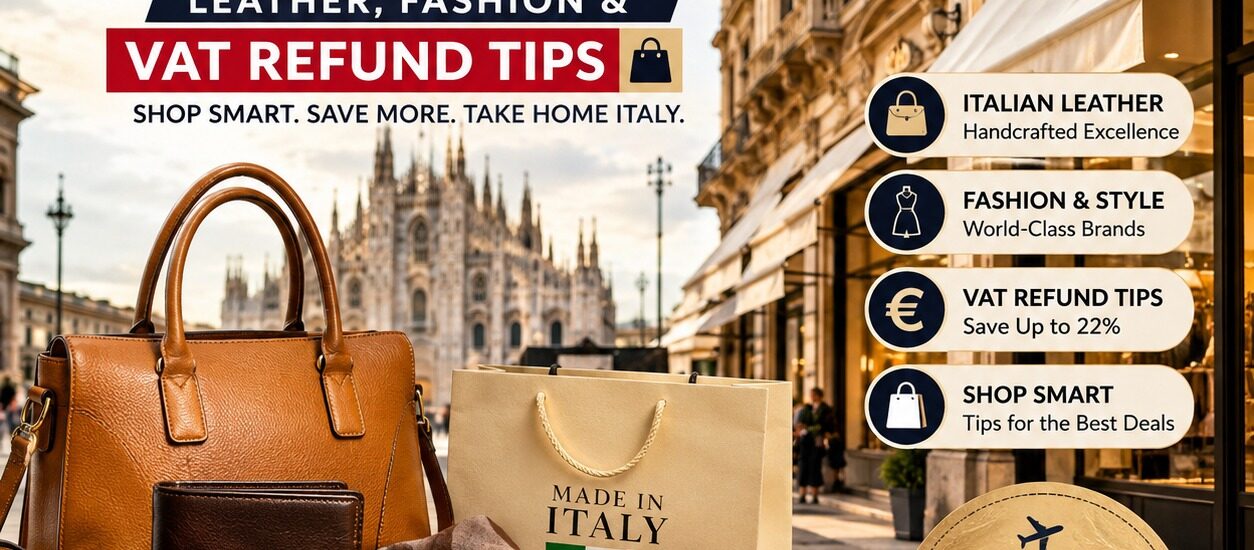
Italy is one of the best shopping destinations in Europe, especially for travelers looking for Made in Italy leather, designer fashion, shoes, accessories, jewelry, and handcrafted products. From the luxury boutiques of Milan to the traditional leather workshops of Florence, shopping in Italy offers a unique combination of quality, craftsmanship, and style.
If you’re planning an Italy trip and want to know what to buy in Italy, where to shop in Italy, how much Italian leather costs, and how to claim a VAT refund, this complete Italy shopping guide will help you shop smarter.
Why Italy Is Famous for Shopping
Italy has a long-standing reputation for fashion, craftsmanship, and luxury design. Italian-made products are particularly famous for their attention to detail, high-quality materials, and traditional manufacturing techniques.
Some of the most popular things to buy in Italy include:
- Italian leather bags
- Leather wallets and belts
- Italian shoes
- Designer clothing
- Sunglasses
- Jewelry and watches
- Handmade ceramics
- Italian silk and textiles
- Perfumes and beauty products
- Local food and gourmet products
- Handmade souvenirs
Italy’s official tourism portal highlights fashion streets, local markets, artisan workshops, and luxury shopping districts across cities including Milan, Florence, Rome, Venice, Naples, and more.
Best Places for Shopping in Italy
1. Milan – Best for Luxury Fashion
Milan is widely regarded as Italy’s fashion capital and is one of the best destinations for luxury shopping.
The most famous area is the Quadrilatero della Moda, or Fashion Quadrilateral. It includes streets such as:
- Via Montenapoleone
- Via della Spiga
- Via Manzoni
- Corso Venezia
Here you’ll find some of the world’s most famous Italian and international fashion brands.
For a more affordable shopping experience, explore areas such as Via Torino, Corso Buenos Aires, Vittorio Emanuele II and the 5 Vie district.
Best for: Luxury fashion, designer bags, shoes, watches and high-end accessories.
2. Florence – Best for Italian Leather
If you’re specifically looking for Italian leather goods, Florence should be high on your shopping list.
Florence has a long tradition of leather craftsmanship. The city’s leather-making heritage is particularly associated with areas around Santa Croce and San Lorenzo.
Popular leather products include:
- Leather handbags
- Jackets
- Belts
- Wallets
- Shoes
- Briefcases
- Travel bags
- Small leather accessories
Florence also combines luxury fashion with traditional artisan workshops, making it a great destination for travelers who want something more unique than mass-produced products.
Where to Shop for Leather in Florence
Look around:
Santa Croce – Known for leather craftsmanship and workshops.
San Lorenzo – Popular for leather goods and markets.
Via de’ Tornabuoni – Better for luxury designer fashion.
Oltrarno – A good area to explore traditional craftsmanship and independent workshops.
3. Rome – Best for Fashion & Luxury Shopping
Rome offers a combination of sightseeing and shopping. You can spend the morning visiting historic attractions and the afternoon exploring luxury boutiques.
One of Rome’s best-known shopping areas is the Tridente, around Piazza di Spagna.
Important shopping streets include:
- Via dei Condotti
- Via Borgognona
- Via Frattina
- Via del Babuino
These streets are home to numerous luxury fashion boutiques and Italian designer brands.
Best for: Designer clothing, luxury accessories, jewelry, shoes and fashion.
What to Buy in Italy
1. Italian Leather Bags
A leather bag is one of the most popular souvenirs from Italy.
Before buying, check:
- Leather quality
- Stitching
- Hardware
- Lining
- Country-of-origin information
- Seller reputation
- Return policy
Don’t automatically assume that an expensive bag is better. Compare craftsmanship and materials between several stores before purchasing.
2. Leather Wallets & Belts
If a designer handbag is outside your budget, smaller leather products can be a better option.
Wallets, belts, card holders and small bags are easier to pack and can still give you a genuine Made-in-Italy experience.
3. Italian Shoes
Italy is famous for handcrafted footwear. Look for comfortable construction, good-quality leather and proper finishing.
Try the shoes on before buying, especially if you’re purchasing expensive footwear.
4. Designer Clothing
Milan is the obvious choice for high-end Italian fashion, while Rome and Florence also offer excellent designer shopping.
If you’re looking for discounts, compare:
- Regular boutiques
- Department stores
- Outlet stores
- Seasonal sales
- Factory or artisan shops
5. Italian Jewelry
Florence’s Ponte Vecchio is particularly famous for jewelry and goldsmith workshops. The area has a long tradition of jewelry craftsmanship.
Italy VAT Refund: Who Can Claim It?
One of the biggest advantages for non-EU tourists shopping in Italy is the possibility of obtaining a VAT refund on eligible purchases.
Generally, travelers who are resident or domiciled outside the European Union can qualify for VAT relief/refund when purchasing eligible goods for personal or family use and taking them out of the EU in their personal luggage.
Important 2026 VAT Threshold
As of 2026, the value of goods purchased must be more than €70 per invoice to qualify under Italy’s VAT refund rules.
This threshold applies per invoice, so keeping your purchases and invoices organized is important.
How to Get a VAT Refund in Italy
Follow these steps:
Step 1: Check Your Eligibility
You generally need to be a traveler who resides outside the EU.
Step 2: Ask the Store for Tax-Free Shopping
At the time of purchase, tell the retailer that you want a tax-free/VAT refund invoice.
Carry your passport or qualifying travel document because the required passport details must be included on the invoice.
Step 3: Keep Your Documents
Keep:
- Passport
- Tax-free invoice
- Purchase receipt
- Purchased goods
- VAT refund documentation
Do not lose the paperwork.
Step 4: Take the Goods Out of the EU
The purchased goods must leave the EU within the required period. Italy’s customs authority states that the export must occur within the third month following the invoice date, with the export evidenced by customs validation.
Step 5: Get Customs Validation
At your departure point from the EU, follow the customs process and obtain the required customs validation for your tax-free documentation.
Italy uses OTELLO, its digital system for managing tax-free shopping and customs validation.
Step 6: Receive Your Refund
Depending on the retailer and tax-free operator, the VAT may be refunded through the applicable process after the required customs validation.
How Much VAT Can You Get Back?
Italy’s standard VAT can be as high as 22%, but don’t assume you will receive the full 22% of the purchase price as cash back.
The actual refund can be lower because of:
- Refund operator fees
- Processing charges
- Different VAT rates for different products
- Store-specific arrangements
Italy’s customs authority notes that VAT relief can range from a minimum of 4% to a maximum of 22% of the selling price depending on the goods and applicable rules.
Example
Suppose you purchase an eligible leather bag for €1,000.
The VAT component of a €1,000 VAT-inclusive price at a 22% VAT rate is approximately €180.33, not €220.
Your actual refund may be lower after applicable processing or service fees.
Italy Shopping Tips for Tourists
1. Compare Prices Before Buying
Don’t buy an expensive leather product from the first store you see.
Visit multiple shops and compare:
- Material
- Craftsmanship
- Price
- Warranty
- Return policy
- VAT refund terms
2. Be Careful With Fake Designer Products
Avoid suspiciously cheap designer products, especially when the seller cannot provide proper documentation.
For expensive purchases, buy from established retailers or reputable boutiques.
3. Ask About “Made in Italy”
“Made in Italy” can be an important consideration, but don’t rely only on a label.
Ask the seller about:
- Where the product was manufactured
- Material origin
- Craftsmanship
- Brand authenticity
- Warranty
4. Keep Your Receipts
Keep all receipts and tax-free documents until you have completed your VAT refund process.
5. Don’t Pack VAT-Refund Goods Too Early
Keep eligible purchases accessible during your journey, particularly if customs inspection may be required.
6. Check Your Airline Baggage Allowance
A shopping trip can quickly turn into excess baggage.
Before buying multiple leather bags, shoes or clothing items, check your airline’s baggage allowance.
Best Italian Cities for Shopping
|
City |
Best For |
Shopping Experience |
|
Milan |
Luxury fashion |
⭐⭐⭐⭐⭐ |
|
Florence |
Leather & craftsmanship |
⭐⭐⭐⭐⭐ |
|
Rome |
Fashion & luxury |
⭐⭐⭐⭐⭐ |
|
Venice |
Crafts & souvenirs |
⭐⭐⭐⭐ |
|
Naples |
Fashion & local products |
⭐⭐⭐⭐ |
|
Turin |
Fashion & specialty shopping |
⭐⭐⭐⭐ |
Italy Shopping Budget
Your shopping budget depends heavily on what you want to purchase.
Budget Shopping
Approximately €20–€80
Good for:
- Small souvenirs
- Accessories
- Small leather goods
- Local products
Mid-Range Shopping
Approximately €80–€500
Good for:
- Quality leather bags
- Shoes
- Jackets
- Premium accessories
Luxury Shopping
€500+
Good for:
- Designer handbags
- Luxury clothing
- High-end watches
- Premium jewelry
Best Time for Shopping in Italy
If you want discounts, consider planning your trip around Italy’s seasonal sales.
However, sale dates can vary by region and year, so check the current dates for the region you are visiting before planning your shopping trip.
For luxury shopping, visiting Milan during fashion-related events can also provide a unique experience, although prices at premium boutiques may not necessarily be lower.
Final Italy Shopping Tips
Before leaving Italy, make sure you:
- Compare prices before making expensive purchases.
- Check leather quality carefully.
- Keep your passport and tax-free documents organized.
- Make sure your invoice contains the required information.
- Remember the €70-per-invoice VAT threshold.
- Keep eligible goods and documentation available for customs procedures.
- Allow extra time at the airport for VAT-related formalities.
- Check your baggage allowance.
- Keep receipts until you have completed the refund process.
- Buy from reputable stores when purchasing expensive designer products.
Final Thoughts
Shopping in Italy is much more than buying designer brands. It is an opportunity to experience the country’s famous craftsmanship, traditional leatherwork, fashion heritage and local creativity.
Milan is ideal for luxury fashion, Florence is one of the best places for Italian leather and artisan products, while Rome offers an excellent combination of sightseeing and high-end shopping.
For non-EU travelers, understanding the Italy VAT refund process can also make expensive purchases more cost-effective. Just remember to check the current requirements, keep your documentation safe and complete the customs validation before leaving the EU.
With the right planning, your Italy shopping trip can give you both memorable experiences and authentic Made in Italy products to take home.